







MANILA, Philippines — The Department of Tourism (DOT) lauds Filipino tourism workers, partners, and stakeholders as the industry capped a year of transformative gains, particularly in gastronomy, tourism infrastructure, and people-centered services and training in 2025—milestones that strengthened the Philippines’ global tourism positioning and reaffirmed tourism’s role as a resilient pillar of the national economy.
The year was marked by landmark achievements such as the historic arrival of the Michelin Guide in the Philippines, the hosting of the first-ever Terra Madre Asia and the Pacific (TMAP), and expanded investments in connectivity, tourism infrastructure, and Filipino workforce development. These advances, carried out in close partnership with local governments, private stakeholders, and frontline tourism workers, underscored the Department’s strategy of building a more competitive, inclusive, and service-driven tourism industry—even amid headwinds from natural disasters and heightened regional competition.
Tourism Secretary Christina Garcia Frasco said the sector’s performance in 2025 reflects the collective efforts of frontliners, local governments, private enterprises, and communities who continue to carry Philippine tourism forward under the administration of President Ferdinand R. Marcos Jr. “Whatever gains we have made this year are only made possible because of the hard work of our tourism workers and stakeholders,” Secretary Frasco said.
“Despite challenges beyond our control, they remained resilient, innovative, and committed to service, ensuring that tourism continues to generate jobs, livelihoods, and opportunities for millions of Filipinos.”
Philippine global milestones, recognitions, and partnerships
The arrival of the MICHELIN Guide on October 30 marked a historic milestone, recognizing 108 establishments in Manila and Cebu, including 1 Two-Star, 8 One-Star, 25 Bib Gourmand, and 74 MICHELIN-Selected restaurants, alongside special awards for sustainability, service, young chefs, and mixology.
Following this, the Philippines hosted the first-ever TMAP in Bacolod City from November 19 to 23, convening producers, chefs, policymakers, and Slow Food advocates from across the region to champion sustainable food systems.
Earlier in the year, the DOT launched the 2024–2028 Food and Gastronomy Tourism Roadmap and introduced Local Market Tourism as a new sub-product during the “Salo-Salo: Taste the Flavor, Experience the Culture” event in Metro Manila. The Department also led the hosting of SALAAM 2025 Expo, a Muslim travel trade show that generated approximately ₱1.8 million in sales, reflecting the growing potential of Halal and Muslim-friendly tourism.
All of these reflect the strong collaboration between the government and the private sector in expanding the reach of Philippine tourism.
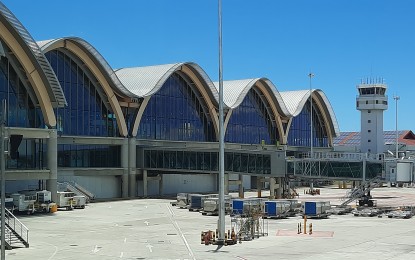
Looking ahead, the DOT is ramping up its preparations for the Association of Southeast Asian Nations (ASEAN) Tourism Forum 2026 in Cebu and the United Nations (UN) Tourism Global Forum on Gastronomy, reinforcing the Philippines’ leadership role in regional and global tourism.
“Preparations for ASEAN are well underway and are being led by the National Organizing Committee, which is overseeing a full year of meetings and activities. The first major engagement for 2026 will be the ATF in Cebu, a flagship event that will bring together tourism ministers from ASEAN Member States and dialogue partners, as well as buyers and sellers from across the region and around the world. In this regard, we are working very closely with our local government units and private sector stakeholders—including hotels, resorts, frontline workers, and dining establishments—to ensure Cebu’s full preparedness as host destination,” enthused Frasco.
She added that 19 new international direct flight routes—both regular and chartered—were launched in 2025, linking gateways such as Manila, Cebu, Clark, Iloilo, and Kalibo to major cities across Asia, Oceania, North America, and Eastern Europe. Alongside the continued expansion of programs such as the Cruise Visa Waiver, these initiatives are expected to drive stronger arrivals growth, longer stays, and broader economic gains.
Inclusive tourism infrastructure boom, people-centered services
Throughout 2025, the DOT strengthened its people-centered tourism services designed to improve accessibility, safety, and overall travel experience.
President Marcos Jr., First Lady Louise Araneta Marcos, and Secretary Frasco led the launch of two gateway initiatives: the Transit Tour Program and Medical Concierge Services.
The Transit Tour Program builds on the Philippines’ hop-on-hop-off model, offering eligible travelers from visa-free countries with a minimum eight-hour layover a safe, curated introduction to Metro Manila’s iconic sites.
The Medical Concierge Service supports the country’s growing medical and wellness tourism segment by providing personalized assistance to medical travelers from arrival to departure and connecting them with DOT-accredited health, wellness, and recovery facilities nationwide.
“Notwithstanding challenges, Philippine tourism has achieved a number of historic firsts, including the launch of the Transit Tour Program, the Medical Tourism Concierge, and other innovative initiatives that continue to elevate the visitor experience. While we remain prudent and conservative in our projections—having learned from recent months that severe weather systems, typhoons, and earthquakes are beyond our control—we are clear about what we can control. And that is how we at the DOT respond,” said Secretary Frasco.
“We have chosen to respond by placing the welfare of our tourism frontliners at the very center of our national tourism agenda, recognizing that a resilient industry is built on the strength, dignity, and well-being of the people who bring Philippine tourism to life,” added the DOT Chief.
The DOT has assisted over 40,000 tourism workers affected by various calamities that have disrupted their livelihoods.
“We did not waste time offering help to our affected tourism workers, who sustained losses in their livelihoods. With the help of other national government agencies, we have distributed medical, social protection, and emergency assistance funds to thousands of tourism workers,” Secretary Frasco said.
Further extending the support for the Micro, Small, and Medium Enterprises (MSMEs) in the tourism sector, the Turismo Asenso Loan Program (TALP), jointly implemented by the DOT, the Department of Trade and Industry (DTI), and the Small Business Corporation (SB Corp.), accounted for a total of 1,025 applications as of December 2025.
On the other hand, the Bayanihan sa Bukas na May Pag-asa sa Turismo (BBMT) program, a joint initiative of the DOT and the Department of Social Welfare and Development (DSWD), provided cash assistance and training to over 2,697 beneficiaries, including 1,760 tourism workers who had already received livelihood training as of December 16, 2025.
Meanwhile, tourists were further supported by the 24/7 Tourist Assistance Call Center (TACC), which has already processed 23,210 transactions across voice, email, live chat, and social media as of November 15, 2025, now with Mandarin and Korean-speaking agents.
To improve on-the-ground convenience, 14 Tourist Rest Areas (TRAs) have been constructed nationwide, offering clean restrooms, information counters, lounges, charging stations, dining areas, and pasalubong centers.
The country also received 136 cruise calls in 2025, with 56,040 onboard passengers, including 15,071 crew members.
At the grassroots level, the second cycle of the Tourism Champions Challenge (TCC) was launched this year, with a project fund of ₱399 million to finance 21 local government units (LGUs) for high-impact tourism infrastructure projects. Municipalities stand to receive ₱15 million each, while cities and provinces will receive ₱18 million each, with performance-based incentives of up to ₱6 million.
The DOT continued to bring stakeholders and diplomatic partners together through the Philippine Experience Program (PEP), which has been implemented in 13 regions as of December 9, 2025, with Eastern Visayas and Central Visayas scheduled in early 2026. These eventually expanded into curated tour packages on Klook as part of the DOT’s collaboration with one of Asia’s leading digital platforms for experiences and travel services.
Inclusivity also remained a priority, with 51 DOT-recognized Muslim-Friendly Accommodation Establishments (MFAEs) nationwide as of December 15, 2025, reflecting continued growth in Halal and Muslim-friendly tourism.
Jobs, skills, and the Filipino Brand of Service
These gains also translated into employment and skills development of many Filipinos.
The DOT’s Filipino Brand of Service Excellence (FBSE) program has trained 409,859 individuals through 7,547 sessions as of December 30, including 140,155 workers trained in 2025 alone. The Tourism Industry Skills Program (TISP) delivered 2,543 trainings benefiting 143,975 stakeholders in 2025. Under the Tourist-Oriented Police for Community Order and Protection (TOPCOP) program, 1,089 tourist police were trained in 2025, with deployments across 118 Tourist Police Assistance Centers and 1,311 Tourist Assistance Desks nationwide.
The DOT also provided extended coverage to more than 1,100 tour guides nationwide, including tour guide kits and personal accident insurance. Livelihood opportunities were also extended to senior citizens, with 30 Manila-based seniors completing Community Tour Guiding Training.
The DOT further strengthened education and innovation through the Tourism Start-Up Challenge 2025, which aims to award ₱5 million each to three national winners and ₱250,000 to regional finalists, as part of a Joint Administrative Order with Tourism Infrastructure and Enterprise Zone Authority (TIEZA) and Commission on Higher Education (CHED) governing the use of the Higher Education Development Fund (HEDF).
Policy reforms addressing competitiveness
Despite global and domestic headwinds, including 34 travel alerts issued by key tourism markets and severe fiscal constraints, the Philippines recorded 5,865,319 foreign visitor arrivals in 2025 based on data captured through the Department of Information and Communications Technology (DICT) eTravel System, underscoring the sector’s resilience amid challenging conditions.
However, based on the Bureau of Immigration (BI) arrivals, a higher figure of 5,940,975 tourists was recorded, reflecting cruise passengers and visitor categories not consistently or not fully captured in eTravel. When combined with 543,085 returning Overseas Filipinos, total foreign visitor arrivals reached 6,484,060 in 2025.
The DOT noted that tourism performance should be viewed beyond arrivals alone, citing strong domestic travel, value creation, and employment generation as key indicators of sectoral health. Using 2025 arrivals as reference, the Preliminary Estimated International Visitor Expenditure was estimated at Php 694 billion based on BI-recorded arrivals. These figures are preliminary and subject to refinement, consistent with the official release by the Philippine Statistics Authority (PSA) expected by the second quarter of this year.
Guided by the National Tourism Development Plan (NTDP) 2023–2028, the DOT remains focused on improving connectivity, enhancing safety, strengthening workforce skills, and elevating service standards to ensure that Philippine tourism continues to be competitive, inclusive, and resilient. (DOT)